Measuring engineering,
in the open.
Field notes from the team building the AI transformation platform for engineering.
Measuring engineering
 Navigara6 min read
How to measure engineering throughput without tracking individual developers
Measure engineering throughput at team and repository level, score changes by delivered value, and keep per-developer views out of performance reviews.
Read article Jirka Bachel7 min read
Why DORA metrics broke after AI, and what replaced them
DORA still measures the delivery pipeline correctly after AI. What it never measured was the value of what moved, the gap a companion metric fills.
Read article Jirka Bachel6 min read
7 engineering metrics that stop working once AI writes the code
Commit count, lines of code, PR count, story points, velocity, cycle time, and acceptance rate each degrade with AI assistance. The mechanism for each one.
Read article Navigara6 min read
How to connect your Git repositories and see throughput data in a day
Connect GitHub, GitLab, Jira, or Linear and Navigara reads back through years of commits. A clean pre-AI baseline takes longer: plan on two to four weeks.
Read article Jirka Bachel6 min read
How do I set a pre-AI baseline for my engineering team?
Set a pre-AI baseline by scoring two quarters of your own Git history from before the assistants arrived, then keeping that method fixed forever.
Read article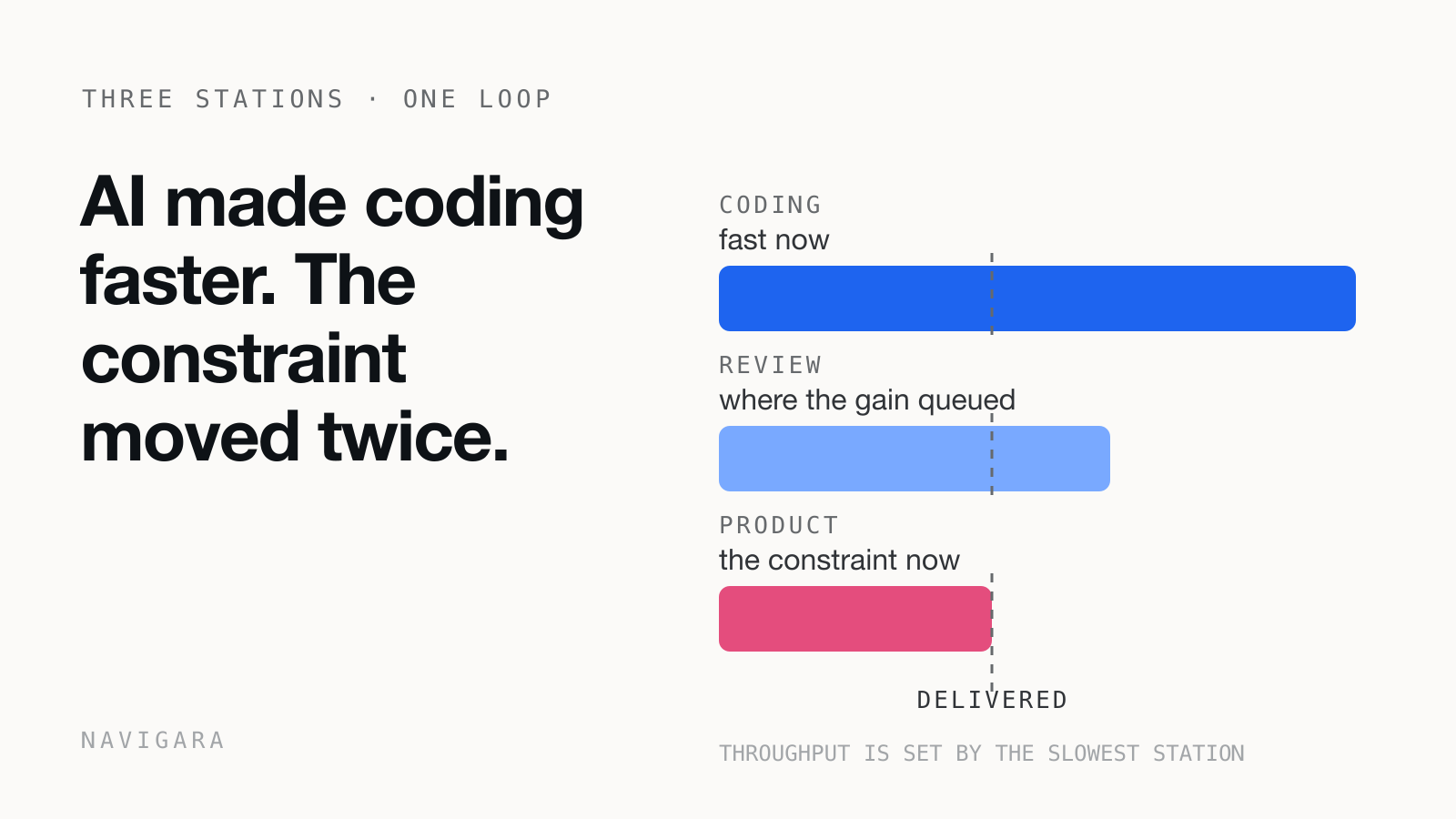 Jirka Bachel and Peter Malina8 min read
AI Made Coding Faster. The Constraint Moved Twice.
Coding, reviewing and product are three stations in one loop, and the slowest one sets delivery. Why the AI coding gain disappears before it reaches the roadmap, how a review queue drained by skipping looks identical to one that was cleared, and why unhealthy specs arrive as a line on the AI invoice.
Read article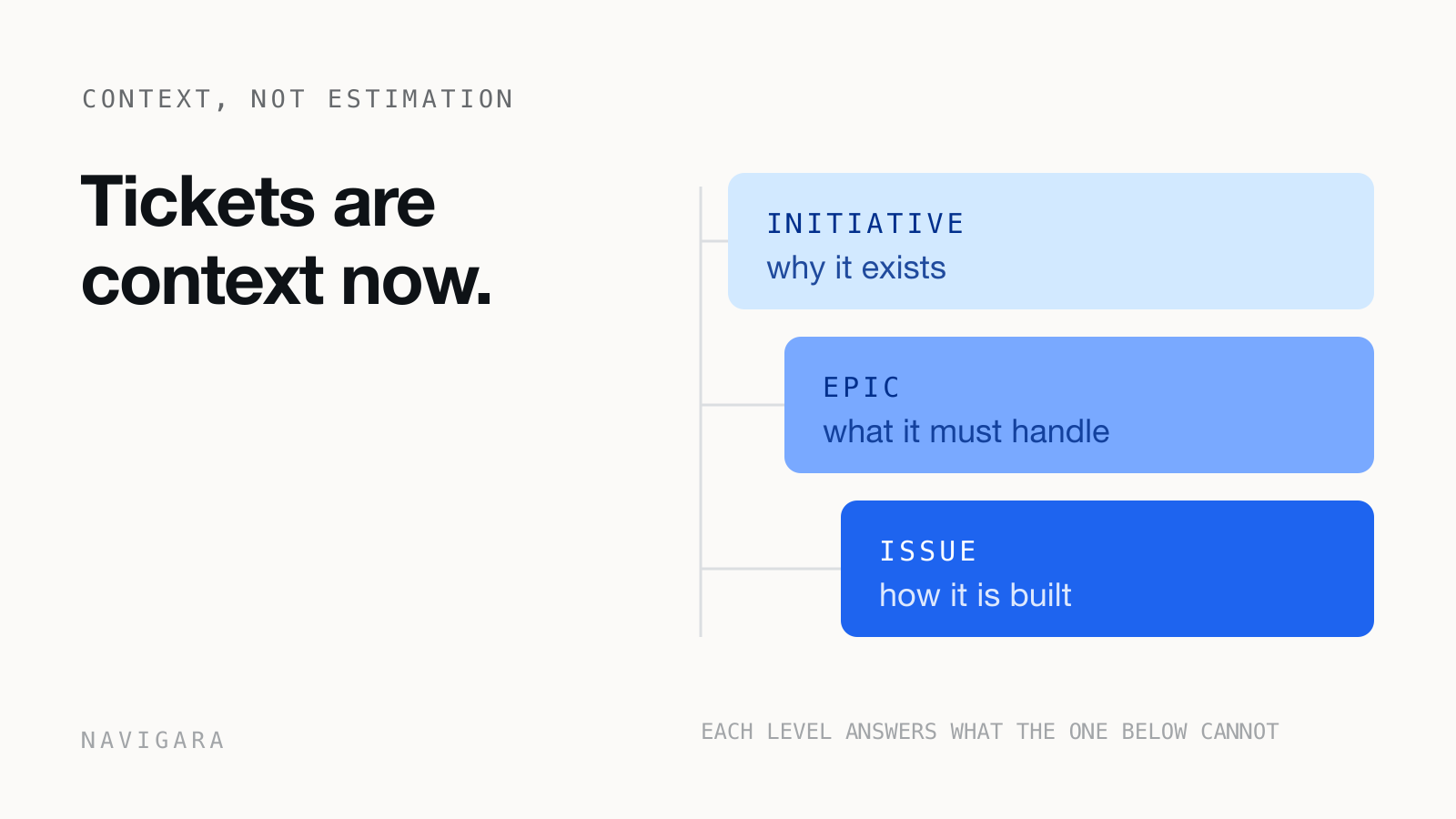 Jirka Bachel and Peter Malina7 min read
Tickets Are Not Project Management Anymore. They Are Context.
Story points are finished and half the industry is asking whether tickets go with them. Wrong conclusion: hallucination stopped being the failure mode, specificity replaced it, and the initiative/epic/issue hierarchy is the only place your intent is written down.
Read article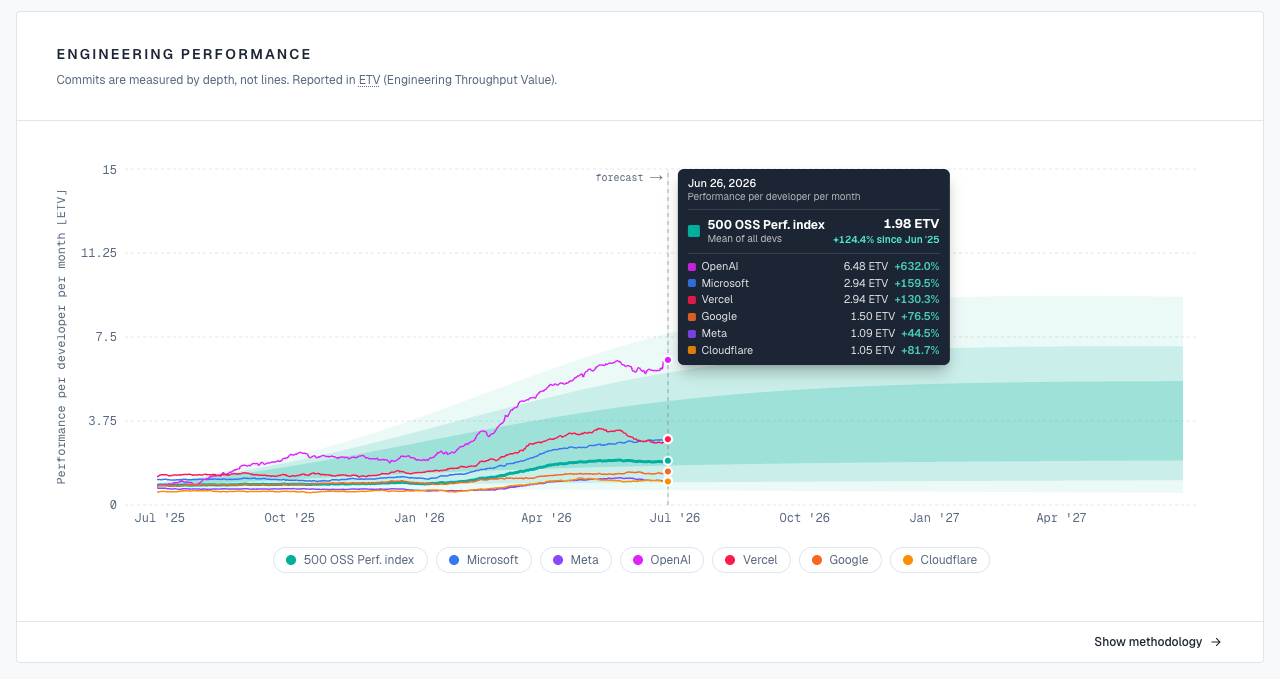 Jirka Bachel5 min read
What Is Engineering Throughput Value (ETV)? Definition and Methodology
Engineering Throughput Value (ETV) is a standardized unit of engineering output, scored from the code itself rather than lines, commits, or story points. Here’s the definition, how each change is scored, and where it’s used.
Read article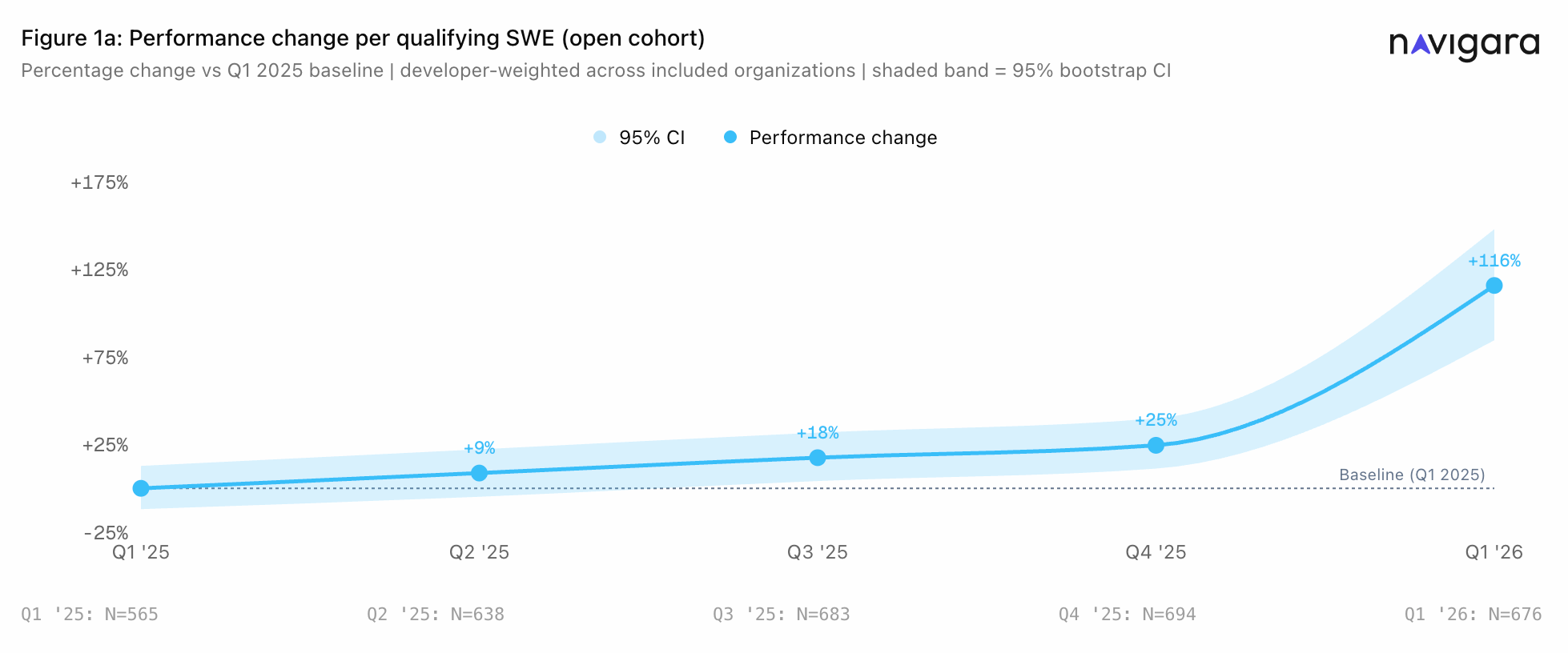 Jirka Bachel9 min read
Performance per Engineer Doubled at Six Big Tech Companies. Here’s How It Was Measured.
Inside the commit-level analysis of 676 engineers across six major tech companies that found a 116% year-over-year jump in performance, with a sharp Q1 2026 inflection point that broke from the steady growth of earlier quarters.
Read article
AI & ROI
 Navigara7 min read
12 questions your CEO will ask about AI ROI, and how to answer them
The 12 questions a CEO asks about AI coding tool ROI, with answers that survive one follow-up, including the four where the honest answer is we cannot know.
Read article Jirka Bachel6 min read
Is our AI assistant actually making the team faster? Here is how to check
Four readings answer whether an AI assistant made your team faster: throughput against your own baseline, activity versus value, and cycle time.
Read article Navigara7 min read
What one developer’s AI usage costs for 50, 100, and 500 engineers
A scaling model you run on your own invoice data, plus how the distribution of AI token spend changes as a team grows from 50 to 500 engineers.
Read article Navigara6 min read
10 ways to cut AI token spend without slowing the team down
Ten specific changes to context scope, model routing, prompt caching, agent step caps, and batch submission that cut token spend without slowing delivery.
Read article Jirka Bachel6 min read
Why our AI bill exploded when we moved off per-seat pricing
Seat pricing capped your AI cost at headcount. Usage pricing ties it to how the tools get used, and agentic workflows changed that pattern overnight.
Read article Navigara6 min read
How much are our engineers actually spending on AI tokens each month?
Calculate monthly AI token spend from your provider invoices, split by interactive and agentic use, then price it against what the team shipped.
Read article Jirka Bachel7 min read
How do I calculate the ROI of our AI coding tools?
ROI on AI coding tools is the throughput gained over your pre-AI baseline, divided by the total cost. The four steps and the trap in step one.
Read article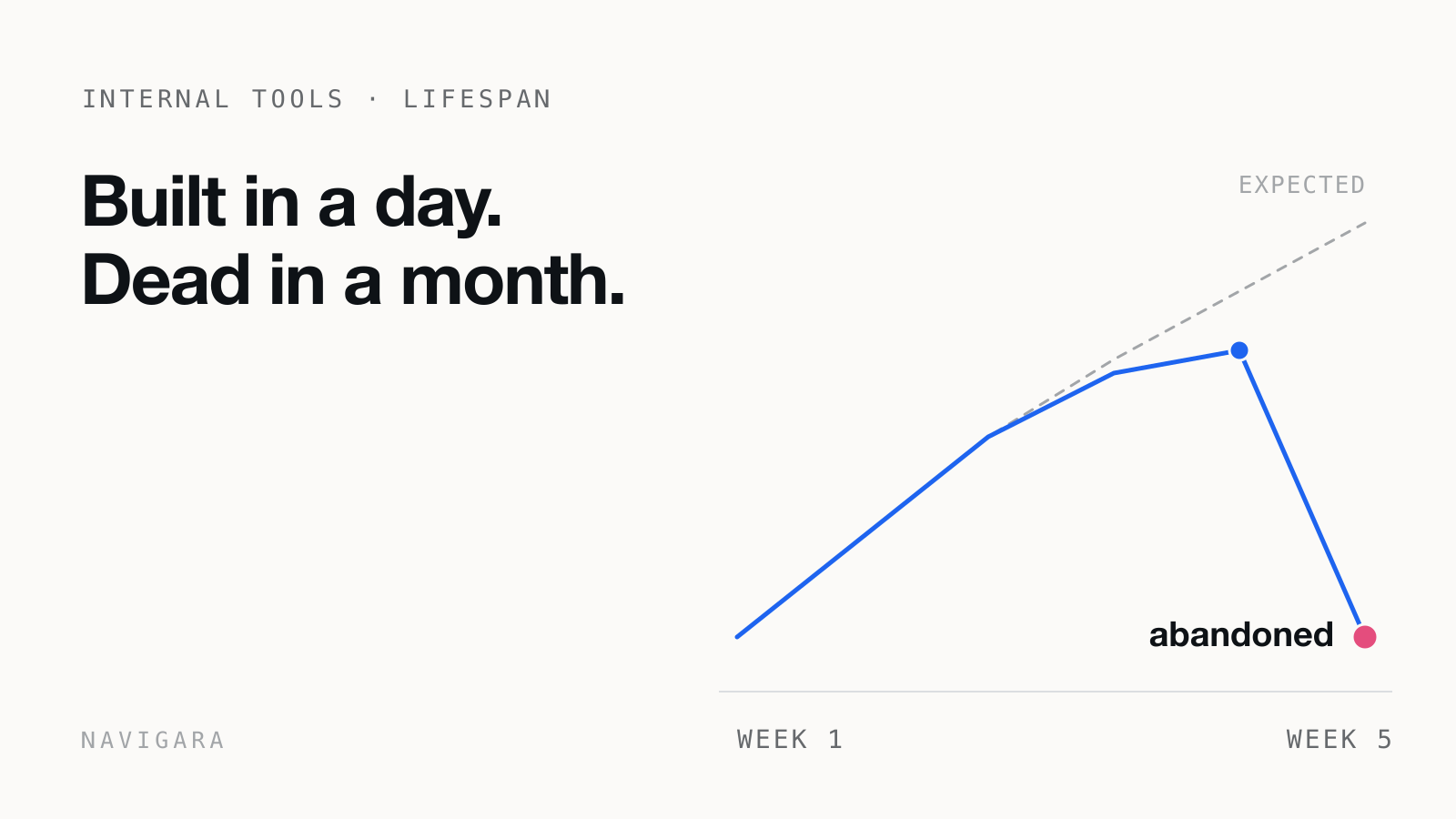 Jirka Bachel and Peter Malina7 min read
Everyone Is Building Internal Tools Again. Most of Them Die in a Month.
Coding agents turn every engineer into a manager with a team and no product manager. What gets built, why it lasts about a month, the four questions that separate a defensible build from a deleted one, and why every metric you have will applaud it on the way down.
Read article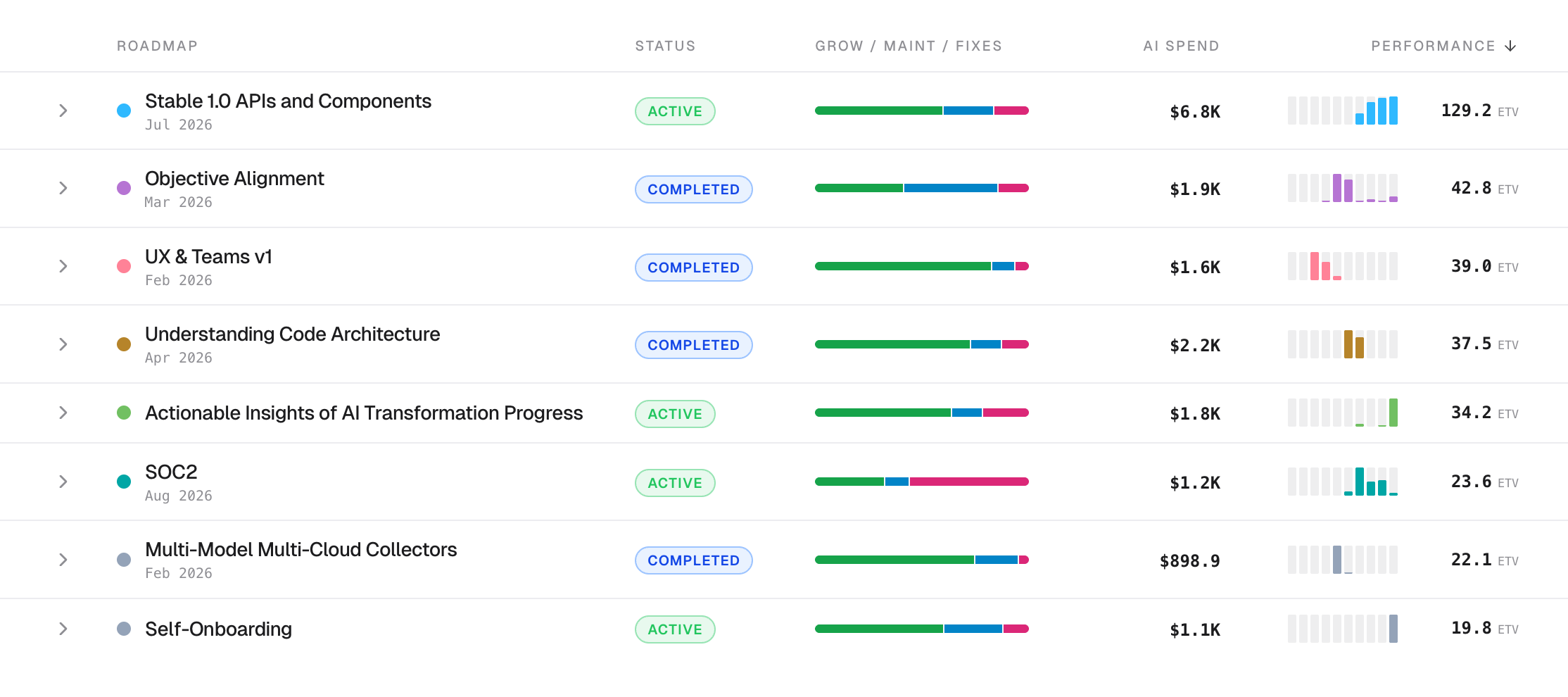 Jirka Bachel10 min read
Three Ways to Manage Token Spend. Two of Them Backfire.
Flat per seat, hard caps, or spend that follows delivery. Notes from engineering leaders at companies between 50 and 1,000 developers: what a $2,000 per seat cap actually does to your roadmap, why your heaviest 10% get throttled first, and the two-column test that tells you which pattern you’re in.
Read article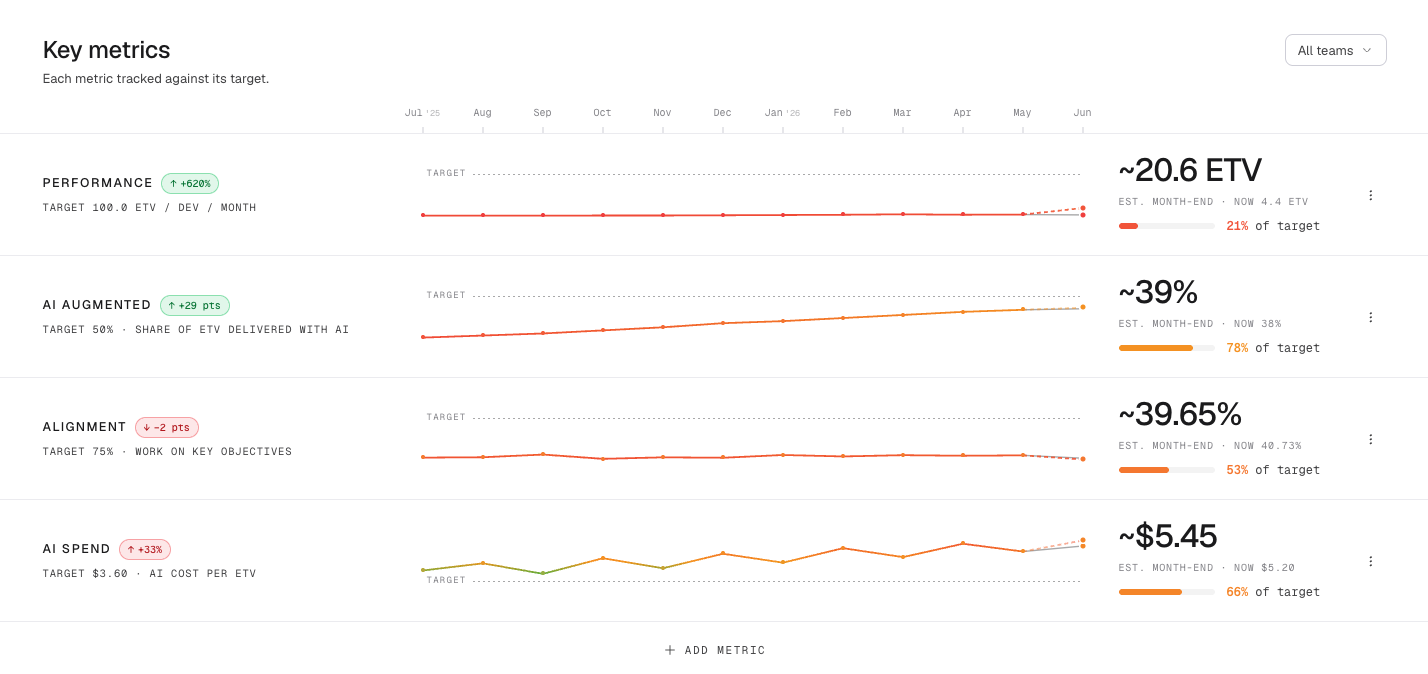 Jirka Bachel2 min read
How to Prove ROI on AI Tools in Engineering
Most teams can’t tie engineering directly to revenue. Here’s how to prove ROI on AI tools by measuring whether they actually ship your roadmap: performance change, work mix, cost per ETV, and roadmap alignment.
Read article Jirka Bachel3 min read
Finding the Link Uber Missed: How to Connect AI Code Spend to Business Value
Uber burned through its 2026 AI coding budget in four months and couldn’t show what it bought. Why ROI on AI coding tools is unknowable until you measure engineering output itself.
Read article
For investors & finance
 Navigara8 min read
What to report to the board about AI’s impact on engineering
Report AI’s engineering impact as throughput against your own baseline, total tooling cost, work mix shift, and one line naming what the data cannot prove.
Read article Jirka Bachel7 min read
How do I defend engineering headcount in a budget meeting?
Defend engineering headcount with throughput per engineer against your own baseline, the cost of deferred work, and a stated interval on every figure.
Read article Jirka Bachel8 min read
How to prove engineering productivity to a CFO who has never read a commit log
Provide a CFO with a value-scored throughput figure against your baseline, priced in loaded cost, with the window, repository set, and interval specified.
Read article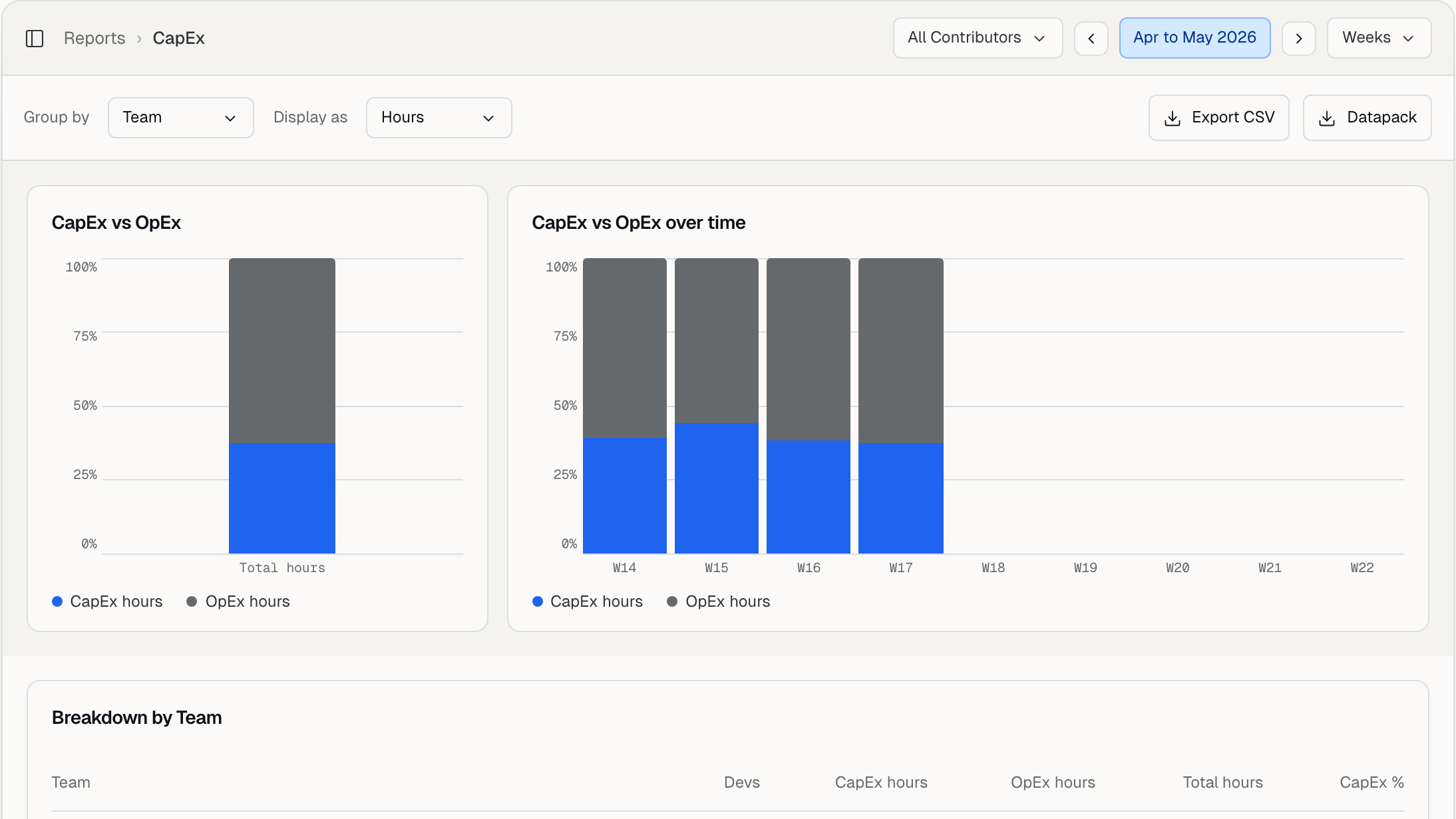 Jirka Bachel5 min read
Your Software CapEx Split Is a Management Estimate. It Should Be Evidence.
Most software capitalization splits come from Jira tickets, quarterly surveys, and a spreadsheet no one can re-run, none of it primary support an auditor accepts. Here’s how to derive audit-defensible CapEx and OpEx from your commit history under IAS 38 and ASC 350-40, and restate any prior period on demand.
Read article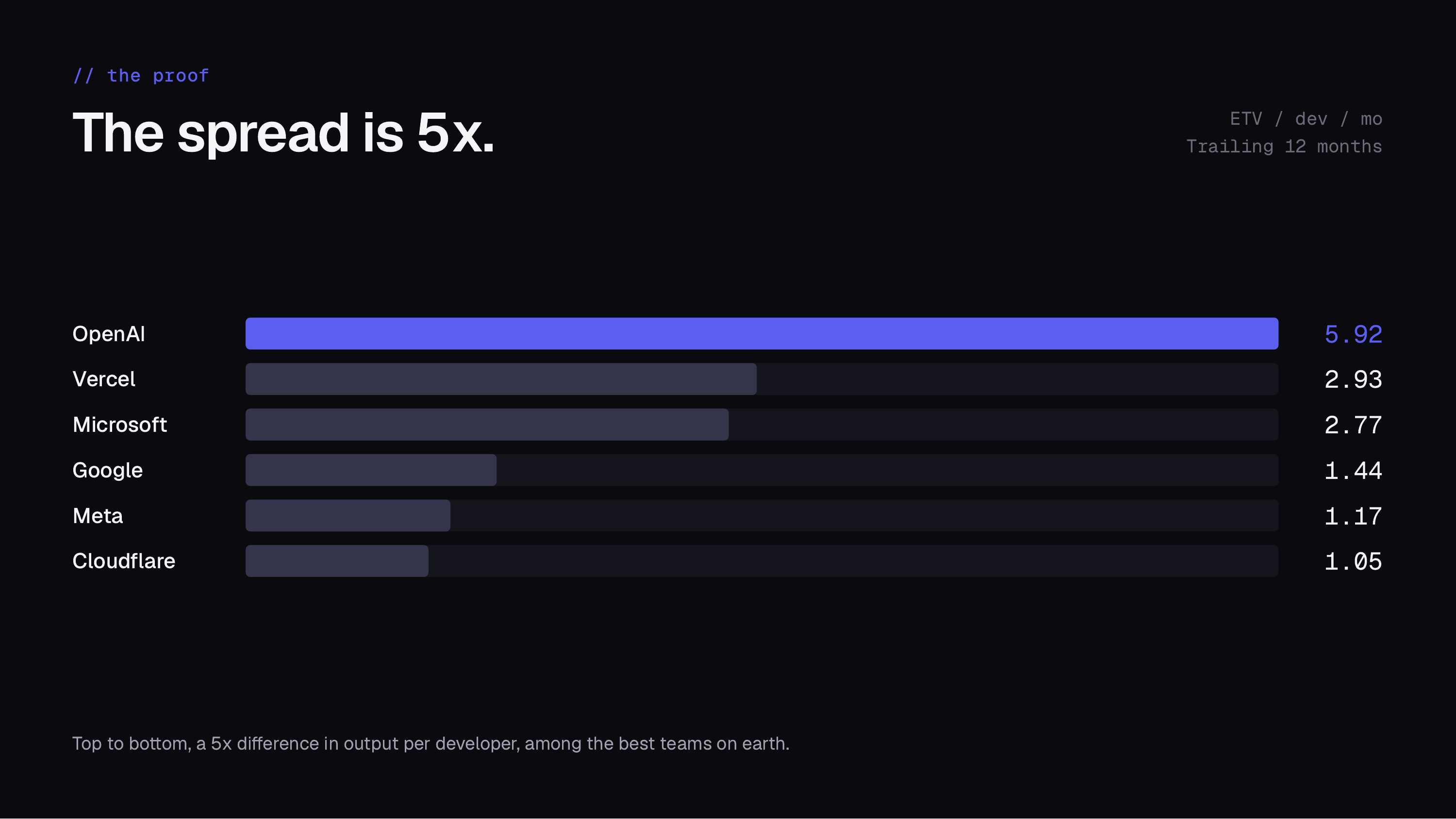 Jirka Bachel4 min read
Benchmark Engineering Before You Wire the Money
Private equity and late-stage VC underwrite everything but engineering on faith. Here’s how to benchmark a target’s engineering against the companies that actually returned your funds, before you wire the money.
Read article
Founder notes
 Jirka Bachel and Peter Malina12 min read
Nobody Will Work Without AI Now. Nobody Can Estimate Anything Either.
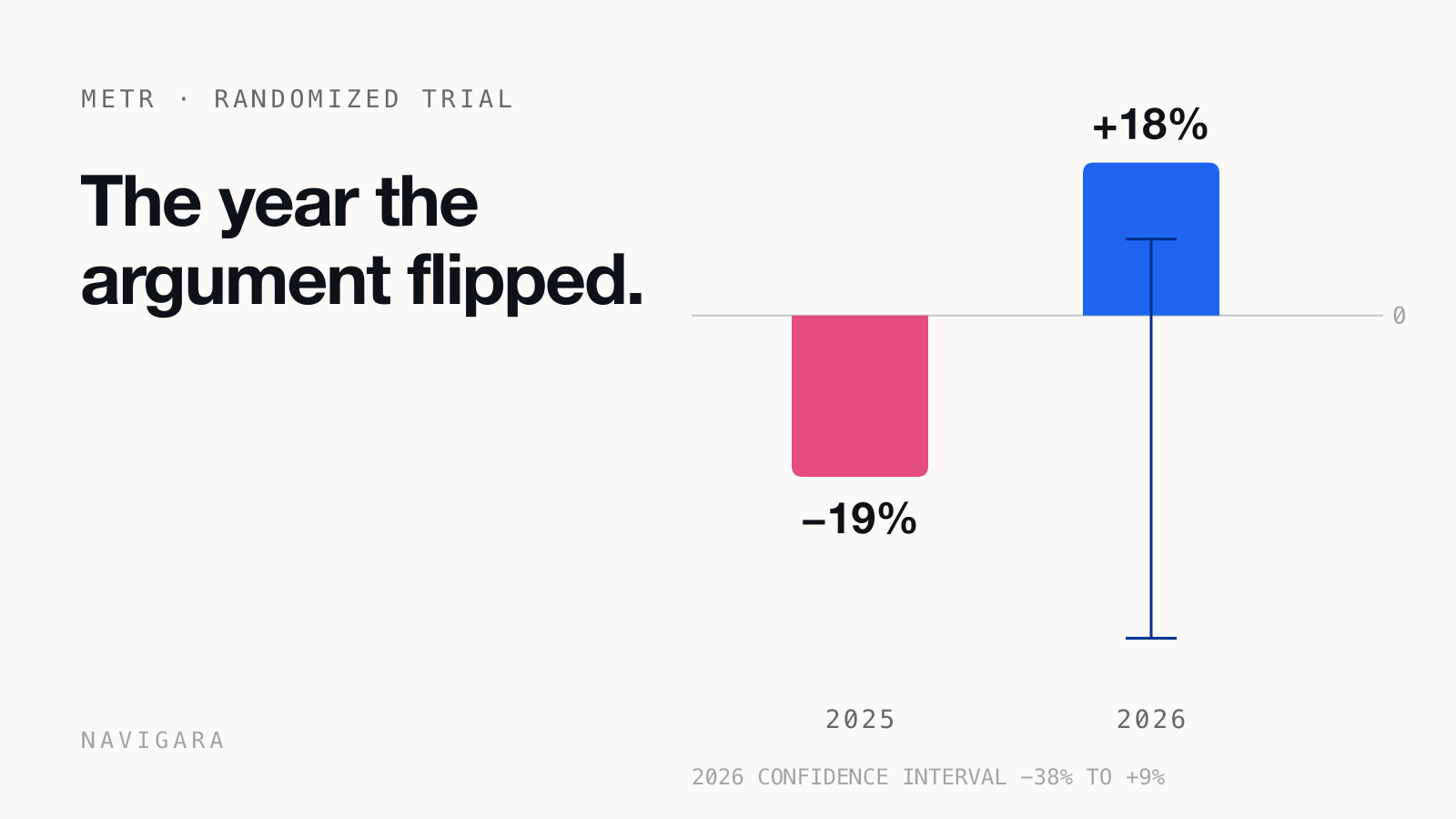
In one year we went from research proving AI slows engineers down to being unable to recruit a control group. What did not change: the layoffs blamed on AI are blown budgets, the talent gap was already there, and every instrument we have left is self-reported.
Read article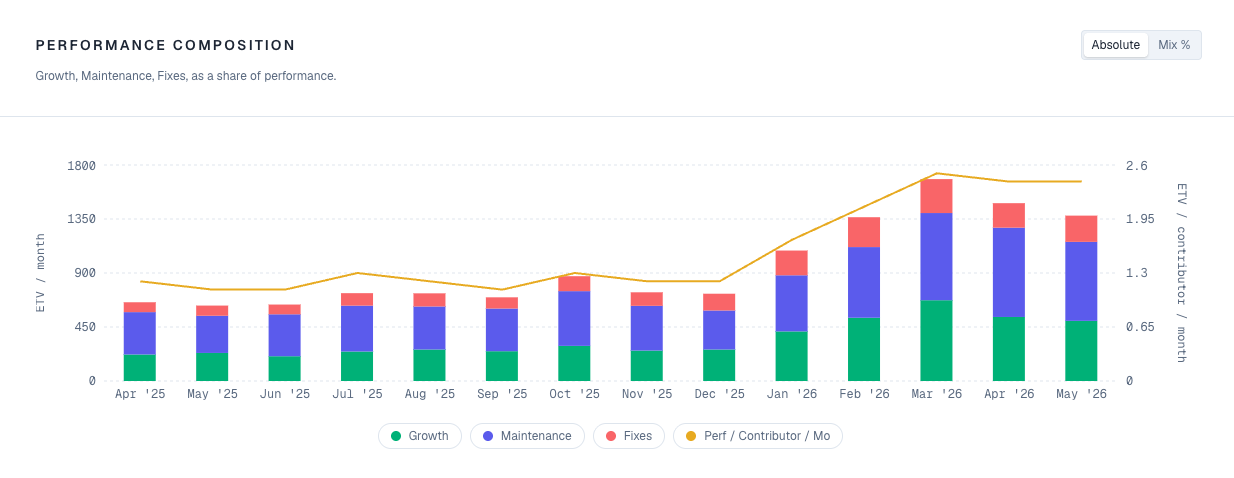 Jirka Bachel3 min read
Is My Engineering Good Enough?
CEOs ask it every week. It starts with AI and ends with “we’re behind.” It’s really a trust problem between management and engineering, and the only thing that resolves it is a peer benchmark. The CTOs who survive walk in with one.
Read article Jirka Bachel7 min read
The Story of Navigara: How We Built the Performance Layer for Modern Engineering
How Navigara grew from a developer career platform into a measurement system for engineering performance, and why we introduced Engineering Throughput Value (ETV) to quantify real code contribution beyond traditional metrics.
Read article
Comparisons
 Navigara4 min read
Navigara vs Allstacks: Engineering Visibility Compared
Allstacks forecasts delivery risk across 30+ connected tools. Navigara scores shipped throughput against your pre-AI year. Scope and pricing compared.
Read article Navigara4 min read
Legacy SEI alternatives after the Pluralsight Flow retirement notice
Appfire will retire Flow on 31 December 2027. What the notice says, what to ask Appfire in writing, and how to pick a replacement without losing your history.
Read article Navigara6 min read
Navigara vs Waydev: activity metrics or throughput value
Waydev scores engineering work using a composite Impact metric, partly derived from lines of code. Navigara scores each change against your pre-AI baseline.
Read article Navigara5 min read
Navigara vs Faros AI: two approaches to engineering intelligence
Faros AI attributes token spend across 60+ data sources. Navigara scores what shipped against your pre-AI year. Where the two overlap and where they diverge.
Read article Navigara6 min read
8 engineering intelligence platforms compared for 2026
Navigara, Jellyfish, DX, LinearB, Swarmia, Faros AI, Waydev, and Appfire Flow compared on what each reads, who it reports on, and what it publishes.
Read article Navigara5 min read
Navigara vs Swarmia: what each one shows an engineering leader
Swarmia shows where engineering time and money went. Navigara shows whether throughput has changed since your pre-AI year. Data, cost, and pricing compared.
Read article Navigara2 min read
Navigara vs LinearB: throughput measurement comparison
LinearB measures how fast work moves through the pipeline. Navigara scores what shipped against your pre-AI year. Data, pricing, and AI cost compared.
Read article Navigara3 min read
Navigara vs DX (Atlassian): baseline data or developer surveys
DX builds its index from tool data and developer feedback. Navigara scores what shipped against your own pre-AI year. Data, cost, and scope side by side.
Read article Navigara9 min read
Faros AI alternatives: 6 platforms for engineering throughput data
Faros AI publishes a Token Attribution Ledger for AI spend. Six alternatives, what each one publishes, and which question decides your choice.
Read article Navigara9 min read
Jellyfish alternatives: 6 engineering intelligence platforms compared
Jellyfish is strong on R&D dollars and capitalization. Compare six engineering intelligence alternatives, what each publishes, and how to choose one.
Read article Navigara6 min read
LinearB alternatives: what each one ties AI spend to
LinearB already measures AI consumption by PR, developer, and team. Here’s what DX, Jellyfish, Swarmia, Waydev, Faros AI, and Navigara tie AI spend to instead.
Read article Navigara9 min read
Swarmia alternatives for engineering leaders reporting to finance
Swarmia is often the right answer for finance reporting. Where it fits, and where Jellyfish, DX, LinearB, Waydev, Faros AI, or Navigara fit better.
Read article Navigara7 min read
Waydev alternatives that do not count commits
Six Waydev alternatives and what each one counts instead of raw volume, why lines of code became unstable after AI, and when Waydev remains the right fit.
Read article Navigara6 min read
DX alternatives for teams that want measured throughput
Six DX alternatives built on repository and delivery data, what each publishes, and when DX remains the right instrument for your team.
Read article Navigara2 min read
Navigara vs Jellyfish: how the two measure engineering throughput
Jellyfish reports where engineering investment went in dollars. Navigara reports throughput against your own pre-AI baseline. A side-by-side comparison.
Read article